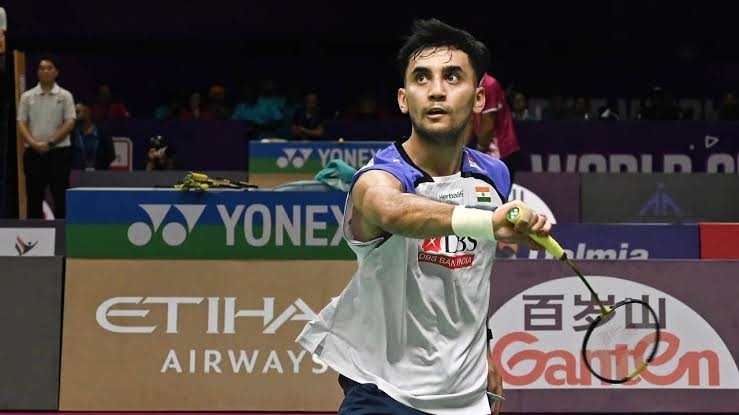

Lakshya Sen’s defensive game is not built around survival alone. When opponents force him toward the rear court, attack his body, or move him from corner to corner, his objective is often to create the conditions for a counterattack. Instead of treating defense and attack as separate phases, Sen connects them through movement, racket preparation, shot selection, and anticipation. A defensive exchange can therefore become an attacking opportunity within one or two strokes.
This approach makes his rallies useful for tactical analysis because momentum can change without an obvious winning shot. Much as someone moving between sports content and a coin up lightning casino page encounters rapid changes in pace and outcome, a Sen rally can shift direction in seconds. The important question is not simply whether he retrieves an opponent’s smash, but what position that retrieval creates for the next exchange.
Defense Begins with Court Position
Effective defense starts before an opponent hits the shuttle. Sen’s base position allows him to cover several attacking options without committing too early. Against players who rely on steep smashes, standing in the wrong position can leave too little time for a controlled response.
Sen adjusts his stance according to the opponent’s location and probable shot. His knees remain prepared for movement, while his racket position helps him respond to attacks directed toward either side of the body.
This matters because defensive badminton is largely a problem of time. A player facing a smash has only a fraction of a second to identify direction, move the racket, and choose a response. Good positioning reduces the distance required for each action.
Sen also avoids unnecessary movement when possible. Rather than making a large adjustment for every shuttle, he often uses short steps and changes of balance. This allows him to recover toward the center without losing stability.
The Retrieval Is Part of the Counterattack
A defensive return can have several purposes. A player can lift the shuttle high, block it toward the net, drive it through the middle, or redirect it across court. Sen’s choice depends on the opponent’s position and his own balance.
A high lift may appear passive, but it can reset the rally if it reaches sufficient depth. The opponent then has to move backward and generate another attack rather than finishing from an ideal position.
The block creates a different problem. When Sen absorbs the pace of a smash and sends the shuttle close to the net, the opponent must move forward immediately after attacking from the rear court. This changes the geometry of the rally.
His defensive drives can be even more disruptive. Instead of returning the shuttle upward, Sen can send it flat into open space. The opponent loses time and may have to play a neutral response. At that moment, Sen has already started converting defense into attack.
Using the Opponent’s Pace
One reason counterattacking defense works is that the defender does not always need to generate power independently. A smash already contains pace. With the right racket angle and timing, that pace can be redirected.
Sen often benefits from compact racket actions during defensive exchanges. A large swing would require more preparation time and make direction easier to read. A shorter action allows him to respond late while maintaining several possible placements.
This is particularly important against repeated attacks. An opponent may expect the second or third smash to produce a weaker return. Sen tries to prevent that pattern by keeping the shuttle low when an opportunity appears.
The tactical effect is cumulative. If an attacker knows that every smash can produce a flat counter, attacking becomes less automatic. The player must consider placement, recovery, and the possibility of being forced forward after hitting from the back.
Movement Turns Survival into Pressure
Sen’s footwork is central to the transition. Reaching a shuttle is not enough. He needs to reach it with enough balance to control the next shot and recover.
This becomes clear when he is moved into the corners. After retrieving a shuttle, his first recovery steps determine whether the opponent can attack the open court. Efficient recovery reduces that opening.
His movement also helps him defend against changes of tempo. An opponent may combine a smash with a drop rather than continuing to attack at full pace. Sen therefore has to move backward for power shots while remaining capable of accelerating toward the net.
That ability creates opportunities. If he reaches a drop early, the rally can change immediately. He can play close to the tape, push into space, or force the opponent to lift. A sequence that began with Sen defending the rear court can finish with him controlling the net.
Reading Patterns Instead of Individual Shots
Elite defense also depends on anticipation. Players cannot rely only on reaction because shuttle speed leaves limited time.
Sen studies patterns within rallies. An opponent’s preparation, body position, previous choices, and preferred combinations provide information about the next shot. If the attacker repeatedly uses a straight smash from one corner, the defender can adjust his position without fully committing.
The challenge is avoiding overprediction. Moving too early allows an opponent to change direction. Sen therefore combines anticipation with a base position that preserves access to several areas.
This creates what can look like effortless retrieval. In reality, part of the work happens before contact. Reading the rally correctly reduces the physical distance he needs to cover.
Why Defensive Pressure Changes Opponents
Strong defense affects decision-making on the other side of the net. When several smashes return, an attacker may try to hit harder, aim closer to the lines, or change direction more often.
Each adjustment introduces risk.
This is one of the strategic values of Sen’s defense. He does not need every retrieval to become an immediate winner. Repeatedly forcing an opponent to play another shot can change the quality of the attack.
Long defensive sequences can also affect energy use. Repeated jumping and smashing require substantial effort. If Sen can absorb that pressure while maintaining movement quality, the attacker may eventually reduce the pace or choose a different shot.
That change can provide the opening Sen needs.
Defense as a Route to Initiative
The defining feature of Sen’s defensive badminton is the transition between phases. His best defensive sequences do not end when he returns the shuttle. They end when he changes who controls the rally.
Positioning gives him time. Compact racket actions help him redirect pace. Footwork supports recovery, while anticipation allows him to reach difficult shots earlier. Blocks, drives, and deep lifts then provide different routes out of pressure.
This makes defense an active tactical system rather than an emergency response. Sen can accept several attacking shots without surrendering the rally because he is searching for a specific moment: a shorter smash, a loose net shot, a predictable follow-up, or an opponent who has moved out of position.
Once that moment appears, the transition can be immediate. The defender becomes the attacker, and the player who appeared to control the rally is suddenly reacting. That ability to reverse pressure is one of the central features of Lakshya Sen’s game.