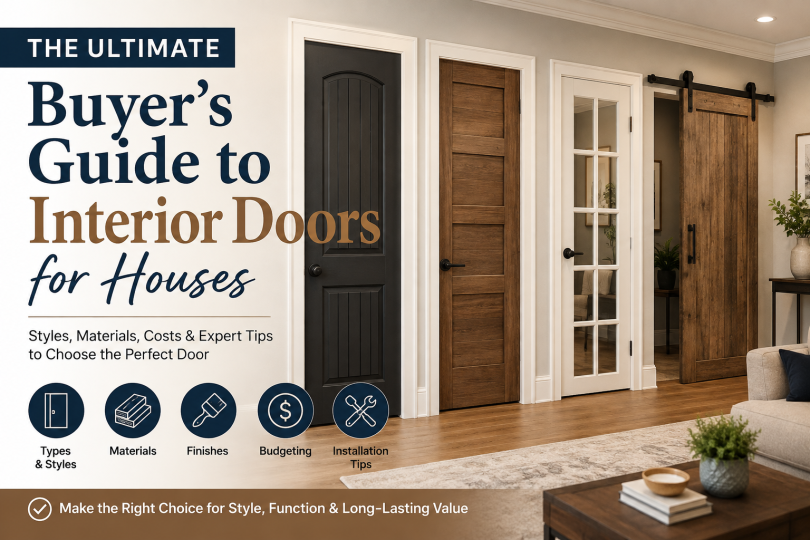

Choosing the right interior doors for your home is about much more than separating one room from another. A well-selected door enhances privacy, improves sound insulation, complements your home’s interior design, and even increases property value. Whether you are building a new home, remodeling an existing one, or simply replacing outdated doors, understanding your options will help you make a smarter investment.
Today’s market offers countless styles, materials, finishes, and price points. From classic wood designs to sleek contemporary options, finding the perfect interior door for houses requires balancing aesthetics, functionality, durability, and budget. This guide walks you through everything you need to know before making a purchase.
Why Interior Doors Matter More Than You Think
Many homeowners spend considerable time choosing flooring, paint colors, and furniture while overlooking the importance of interior doors. Yet these doors influence the appearance and functionality of every room.
Quality interior house doors provide several important benefits:
- Improve privacy throughout the home
- Reduce unwanted noise between rooms
- Enhance interior design consistency
- Increase home value
- Improve energy efficiency by separating climate-controlled spaces
- Offer long-lasting durability when properly maintained
Selecting the right doors interior solutions creates a polished look that ties your entire home together.
Understanding the Different Types of Interior Doors
Before shopping, it helps to understand the most common types available. Every home has different needs, and each style serves a unique purpose.
Panel Doors
Panel doors remain one of the most popular choices for residential properties. Their timeless appearance fits both traditional and modern interiors. They are available in multiple panel configurations and numerous finish options.
Flush Doors
Flush doors feature a smooth, minimalist surface that works especially well in contemporary homes. They are affordable, easy to maintain, and available in many materials.
French Doors
French doors feature glass panels that allow natural light to move between rooms while maintaining separation. They work particularly well for home offices, dining rooms, and living areas.
Pocket Doors
Pocket doors slide into the wall instead of swinging open. They are ideal for homes where maximizing floor space is important.
Barn Doors
Barn doors have become increasingly popular because they combine functionality with decorative appeal. They create a stylish focal point while saving space.
Understanding these options makes choosing interior doors for homes much easier.
Choosing the Right Material
Material selection significantly impacts durability, maintenance requirements, appearance, and cost.
Solid Wood
Solid wood remains a premium choice because of its beauty and longevity. It offers excellent sound insulation and can be refinished multiple times.
However, solid wood requires regular maintenance and may expand or contract in changing humidity levels.
Solid Core
Solid core doors provide many of the benefits of wood while remaining more affordable. They deliver better sound insulation than hollow alternatives and feel more substantial.
Hollow Core
Hollow core doors are lightweight and economical. They are commonly used in bedrooms, closets, and utility rooms where heavy soundproofing is unnecessary.
MDF
Medium Density Fiberboard provides a smooth painted finish and resists cracking better than natural wood. It is a practical option for many homeowners seeking value.
The best interior door depends on your budget, lifestyle, and design preferences.
Matching Doors to Different Rooms
Every room serves a different purpose, and your doors should reflect those functional needs.
Bedrooms benefit from solid core doors because they offer greater privacy and better sound reduction.
Bathrooms require moisture-resistant materials that perform well in humid conditions.
Home offices often benefit from solid wood or solid core doors to minimize distractions during work.
Closets typically work well with lightweight hollow core doors or sliding designs.
Dining rooms may feature elegant French doors that create openness while maintaining flexibility.
Choosing suitable interior doors for houses based on room function ensures better long-term satisfaction.
Finding the Right Style for Your Home
The style of your doors should complement your home’s architecture rather than compete with it.
Traditional homes often feature raised panel doors with rich wood finishes.
Modern homes usually incorporate flush doors, clean lines, and neutral colors.
Farmhouse interiors pair beautifully with sliding barn doors and natural wood textures.
Luxury homes frequently include high end interior doors featuring premium hardwoods, custom carvings, decorative glass, or designer hardware.
Consistency throughout the home creates a more cohesive appearance while allowing certain rooms to feature distinctive statement pieces.
Understanding Door Sizes and Measurements
Accurate measurements are essential before purchasing replacement doors.
Measure:
- Door height
- Door width
- Door thickness
- Frame dimensions
- Swing direction
- Hinge placement
Even small measurement errors can create installation challenges and unnecessary expenses.
If replacing an existing door slab, verify every measurement before ordering. If replacing the entire frame, additional dimensions become necessary.
Professional measurements often save both time and money.
Selecting the Best Finish and Color
Door finishes contribute significantly to your home’s overall appearance.
Natural wood finishes showcase grain patterns that add warmth and character.
White painted doors remain a timeless choice because they complement virtually every decorating style.
Black doors have become increasingly popular in contemporary interiors by adding dramatic contrast.
Gray tones provide a sophisticated alternative for transitional homes.
When selecting finishes, consider flooring, wall colors, trim, cabinetry, and lighting to maintain visual harmony throughout your house.
Hardware Makes a Bigger Difference Than Many Realize
Door hardware affects both appearance and daily usability.
Popular hardware finishes include:
- Satin nickel
- Matte black
- Polished chrome
- Antique brass
- Oil-rubbed bronze
Choose hardware that coordinates with lighting fixtures, cabinet handles, and plumbing fixtures whenever possible.
Quality hinges, handles, and latches also improve long-term durability and smoother operation.
Budgeting for Your Purchase
Door prices vary widely depending on material, construction quality, design complexity, and hardware.
Budget-friendly options generally include hollow core flush doors.
Mid-range products often feature solid core construction with improved finishes.
Premium selections include custom hardwood designs, decorative glass, premium hardware, and handcrafted details.
When evaluating interior doors for sale, avoid focusing solely on the purchase price. Consider installation costs, maintenance requirements, expected lifespan, and long-term value.
A higher initial investment often delivers better durability and improved overall satisfaction.
Common Buying Mistakes to Avoid
Many homeowners regret their purchase because they overlook important details.
Some of the most common mistakes include:
- Choosing appearance over functionality
- Ignoring sound insulation
- Purchasing incorrect sizes
- Selecting unsuitable materials for humid areas
- Overlooking hardware quality
- Mixing inconsistent door styles throughout the home
- Buying based only on price
Planning carefully helps you avoid expensive replacements later.
When Custom Doors Are Worth Considering
Standard sizes meet most residential needs, but custom doors become valuable in specific situations.
Custom options work well for:
- Historic homes
- Luxury properties
- Unusual openings
- Architectural renovations
- Designer interiors
- Specialty room entrances
Although custom solutions cost more, they provide a perfect fit and greater design flexibility.
Homeowners seeking unique interior door for homes projects often find custom manufacturing worthwhile.
Installation Tips for Better Results
Even the highest-quality doors can perform poorly if installed incorrectly.
Professional installation ensures:
- Proper alignment
- Smooth opening and closing
- Secure hardware placement
- Improved energy efficiency
- Longer service life
If installing doors yourself, carefully follow manufacturer instructions and verify measurements before making adjustments.
Small installation errors can lead to sticking, uneven gaps, or premature wear.
Caring for Your Interior Doors
Routine maintenance helps preserve appearance and functionality for many years.
Simple maintenance practices include:
- Dust doors regularly
- Clean with appropriate products
- Tighten loose hardware
- Lubricate hinges when necessary
- Repair scratches promptly
- Avoid excessive moisture exposure
Wood doors may occasionally require refinishing depending on wear and environmental conditions.
Consistent maintenance protects your investment while keeping your home looking polished.
Making the Right Choice for Years to Come
Buying new interior doors is an investment that affects your home’s comfort, appearance, and functionality every day. Rather than rushing the decision, take time to compare materials, construction quality, design styles, hardware, finishes, and installation requirements.
Whether you are searching for elegant high end interior doors or affordable interior doors for sale, the best option is the one that meets your household’s practical needs while complementing your personal style. Carefully selected interior doors for homes improve privacy, enhance visual appeal, and provide reliable performance for many years.
By understanding the available choices and avoiding common purchasing mistakes, you can confidently select interior house doors that combine beauty, durability, and value. A thoughtful investment today will continue enhancing your living spaces well into the future, making every room feel more complete, comfortable, and inviting.